

 RSS Feeds:
News |
- Over 130 Countries to Sign Paris Agreement April 22
- Quebec Cree Sue Ontario and Canada
- Taxpayers To Pay For Arctic Oil Exploration
- World Water Day 2016
- Safeguards For Scientific Work In Canada
- The End of Tarsand Expansion
- Canada - Human Rights At Home Matter
- Canada's New Climate Test
- Manitoba NDP Promises Environmental Bill of Rights
- Clean Energy – A Greener Nafta?
- Canadian Fossil Fuel Subsidies Ridiculous: $46 Billion
- Renewables The Key To Climate Goals - IRENA
| Over 130 Countries to Sign Paris Agreement April 22 | 10 April 16 |
Last December in Paris, world leaders came together to agree on a set of goals and pathways to decarbonize the global economy and increase capacity to adapt to climate change. It was a landmark achievement, but just the beginning. Every country – with the support of cities, the private sector, and citizens – must now move swiftly to fulfill its promises and bring climate change under control. Over 130 countries have confirmed to United Nations headquarters that they will attend the signing ceremony, including some 60 world leaders, amongst them President Francois Hollande of France. Canada's prime minister will be there to sign. The event will also be attended by the President of COP21, France’s Segolene Royal, and the Executive Secretary of the United Nations Framework Convention on Climate Change (UNFCCC) , Christiana Figueres. All Parties to the UN Framework Convention on Climate Change are invited to sign the agreement. International practice is that full powers are required to sign.
View April 8, 2016 Climate Change News article |
|

 Print version Print version |
Top |
| Quebec Cree Sue Ontario and Canada | 12 March 16 |

Grand Chief Matthew Coon Come calls the suit the latest chapter in the Cree Nation's struggle to ensure that its pre-existing rights over all of its traditional lands are properly respected. "The imposition of the Ontario-Quebec boundary cut through our homeland of Eeyou Istchee," Coon Come said in a release. Our people have used, occupied, governed and protected these lands in Ontario since time immemorial, but our rights in these lands have never been addressed in any treaty," he said.
View March 8, 2016 CBC News article |
|
|
Print version |
Top |
| Taxpayers To Pay For Arctic Oil Exploration | 12 March 16 |

The Liberal government says it is proceeding, behind closed doors, with a review of Canada's Arctic drilling law that could see it relinquish up to $500 million to major oil companies that want to use the money to pursue risky exploration projects. Not only do the big oil companies want extensions on their contracts, they are seeking repayment on the collective $500 million in security deposits to obtain those licenses—after they give Arctic drilling another shot. Arctic oil exploration has slowed down in the wake of a plunge in global commodity prices. The industry also struggled to meet new safety conditions imposed by authorities following BP's 2010 offshore drilling disaster in the Gulf of Mexico. Environmentalists who have reviewed the paper trail say they have been skeptical about the review ever since it was announced. "Now, (the review) is being continued under a different government, and it's possible that this minister has a different objective of the review than (former Conservative minister) Valcourt," said Speers-Roesch, from Greenpeace Canada. "So I guess you can't be sure that the same attitude is there. Maybe they're taking a different approach, but that remains to be seen."
View February 29, 2016 National Observer article |
|
|
Print version |
Top |
| World Water Day 2016 | 12 March 16 |
Today, almost half of the world's workers - 1.5 billion people - work in water related sectors and nearly all jobs depend on water and those that ensure its safe delivery. Yet the millions of people who work in water are often not recognized or protected by basic labour rights. The theme in 2016 — Water and Jobs — focuses on how quantity and quality of water can change workers' lives and livelihoods - and even transform societies and economies.
View March 9, 2016 Huffington Post article |
|
|
Print version |
Top |
| Safeguards For Scientific Work In Canada | 12 March 16 |

The Professional Institute of the Public Service of Canada (PIPSC), which represents over 15,000 federal scientists, and Evidence for Democracy (E4D), which advocates for the transparent use of evidence in democratic decision making by government, have commended the government's early announcements lifting the muzzle placed on scientists by the previous Harper government. They are calling on the Prime Minister and Science Ministers to take the next steps to put in place the policies and infrastructure needed to support science integrity today and to prevent future governments from muzzling scientists. Science needs to be safeguarded from future attacks and new policies are needed to clarify the rules for government scientists, protect the integrity of their research and make it harder for future governments to muzzle scientists.
View March 9, 2016 DeSmog Canada article |
|
|
Print version |
Top |
| The End of Tarsand Expansion | 28 February 16 |
All proposed new pipeline routes out of Alberta are facing legal challenges, opposition by local authorities and regulators, and broad-based public opposition. All of the major projects have been significantly delayed with some cancellations seemingly imminent. No pipeline has been built since 2010, despite active industry efforts. The recent drop in oil prices has furthered the troubles of oilsands producers who, during the last 15 years, have dumped an estimated $200 billion into the resource. In recent months roughly 35,000 energy industry jobs have been lost in Alberta. "Within the realm of sanity, I think the oil sands are finished," says David Schindler, who, as a limnologist and ecologist at the University of Alberta played a key role in forcing the tar sands to change the way it monitors and reports air and water pollution. "With their product now so cheap, they are operating well below cost, only desperately trying to recoup some of the huge startup investment rather than see it all lost." He predicted that the industry will undergo major consolidation until only one or two deep-pocketed giants remain. But, he added, "Eventually they too will fall. New investment? Not unless investors are total idiots."
View February 23, 2016 The Energy Mix article |
|
|
Print version |
Top |
| Canada - Human Rights At Home Matter | 28 February 16 |
The delegation is being led by Human Rights Watch, which spent approximately a year researching the water and sanitation conditions in a number of Ontario First Nations, including Shoal Lake 40, Neskantaga, Grassy Narrows and Batchewana. All three communities were among five studied by Human Rights Watch, which found Canada to be violating treaty rights on water and sanitation. "The chronic neglect of basic human rights in Grassy Narrows is extremely troubling and the ongoing cost in human suffering and cultural loss is staggering," said Craig Benjamin, Indigenous rights campaigner with Amnesty International Canada. Indigenous peoples' organizations and human rights groups are calling on the federal government to acknowledge the serious concerns of First Nations, Inuit and Metis peoples in Canada and to make clear commitments to action as the country's record is reviewed before a UN human rights body. 30 civil society organizations took part in the UN's review of Canada's obligations under the International Covenant on Economic, Social and Cultural Rights (ICESCR). "Unfortunately, Canada risks getting off to a bad start," said Alex Neve, Amnesty International Canada. "The recently elected federal government has pledged to build a new relationship with Indigenous peoples based on respect for rights as set out in the Treaties, the Constitution and international human rights instruments. We were deeply disappointed that their written response to the UN Committee continued the previous government's practice of downplaying and misrepresenting the profound gaps in human rights faced by Indigenous peoples in Canada." Judy Da Silva, who has travelled to Geneva from the Grassy Narrows First Nation, said, "Some of our children continue to be born with mercury poisoning and for decades nothing has been done to clear the poison from our river. In the past Canada has not respected our rights but I still have hope that the tide will finally turn for us and that the Prime Minister will honour his word."
View February 25, 2016 Huffington Post article |
|
|
Print version |
Top |
| Canada's New Climate Test | 28 February 16 |
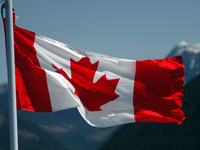
The Climate Test is a proposal being delivered jointly by environmental groups and civil society in Canada and the U.S., to President Obama and Prime Minister Trudeau calling on them to align their governments' energy policy and decision-making with the demands climate science has laid out for us and the international climate agreements our leaders have forged. Environment Minister Catherine McKenna and Natural Resources Minister Jim Carr announced Canada's intention to apply a climate test to major energy infrastructure proposals. Right now energy policy is based on an outdated model that suggests business as usual for years to come and thus continued burning of fossil fuels at levels that would mean climate catastrophe. The 'business as usual' approach looks at individual oil pipeline or LNG terminal proposals without worrying about the oil sands mines or gas fields they're connected to. The new 'climate test' approach will include the carbon pollution from the project being proposed and the carbon pollution from the development associated with it. “Proposed energy infrastructure, such as oil sands pipelines and LNG export terminals, have important climate consequences that must be considered by regulators and elected officials. Approving projects that facilitate emissions growth across Canada is not in the public interest in the absence of a credible plan to meet the country's climate change commitments. Canada will now assess how infrastructure investments support long-term prosperity in a world transitioning to renewable energy. - Erin Flanagan, federal policy director at the Pembina Institute
View February 23, 2016 Climate Test press release |
|
|
Print version |
Top |
| Manitoba NDP Promises Environmental Bill of Rights | 14 February 16 |

The campaign seeks protection of the right of citizens for a clean environment, that is: clean air, clean water, clean and safe food, and fully functioning ecosystems that provide services to nature and humans. Implicit in these goals is protection from climate change impacts. Municipalities and cities are endorsing environmental rights for citizens and signing onto the campaign. Manitoba is the first province to take this step. Included in Manitoba's intention are a code of practice to enforce these environmental rights, with independent oversight to review government department policies and actions. The Manitoba government posted a set of questions, and requested comments from Manitobans about potential content for the Manitoba Environmental Bill of Rights. No public registry is in place for the public review. Draft text is not yet available. EcoJustice Canada, a charitable group of environmental lawyers, released its advice for the contents of the future Manitoba Bill of Environmental Rights. Manitoba Wildlands endorsed the EcoJustice advice in its comments, while commenting that some of the comparisons to the Ontario EBR system do not apply in Manitoba. To date there is no Bill in the Legislature, though a session of the Manitoba Legislature begins February 28, 2016. If the Environmental Bill of Rights is tabled it could go to committee, including for public presentations, before the session ends. The Manitoba provincial election is dated April 19, 2016.
View October 16, 2015 Manitoba Government news release |
|
|
Print version |
Top |
| Clean Energy – A Greener Nafta? | 14 February 16 |

We all know how that story ended. When President Obama did say no to Keystone late last year, the new Trudeau government's response pivoted straight to cleaner energy, stating that Canada will work with "like-minded countries to combat climate change, adapt to its impacts, and create the clean jobs of tomorrow." In other words: we hear you, and we're going to start talking clean. Canada, the United States and Mexico have signed a trilateral agreement to mark the start of discussions on the first North American accord on climate change and clean energy. Canada's Energy Minister Jim Carr, U.S. Secretary of Energy Ernest Moniz and Mexico's secretary of energy, Pedro Joaquín Coldwell, signed a memorandum of understanding on North American climate change and energy collaboration in Winnipeg on Friday February 12, 2016. "It's the fact we are recognizing that our energy relationship is more than just oil, and there is more to the Canada-U.S. relationship than the Keystone pipeline," said Keith Stewart, head of Greenpeace Canada's climate and energy campaign. The urgent need to move away from energy produced by fossil fuels – such as coal, oil and gas – was made abundantly clear earlier this year when the UN's Intergovernmental Panel on Climate Change published a report that said the world needed to make a "massive shift" to renewable energy in order to curb climate change. The end of the fossil era is inevitable and the renewable energy era has already begun. With the renewable job sector already providing more jobs than fossil fuel based sectors it is clear that green, clean energy jobs are key to boosting both the economy and meeting Canada's climate change commitments.
View February 12, 2016 Huffington Post article |
|
|
Print version |
Top |
| Canadian Fossil Fuel Subsidies Ridiculous: $46 Billion | 14 February 16 |
The big gap reflects the IMF’s method of calculation that includes uncollected taxes and externalized costs, as well as direct support. Globally, this figure balloons to US$5.3 trillion or 6.5 per cent of the world's GDP. To put that enormous sum in perspective, the global giveaway to the energy sector amounts to 40 times more money than is contributed in aid to the world's poorest people. What could Canada do with another $46 billion each year? There are proposed light rail projects that could be built and only Canada would have $35 billion left to spend. Canada’s need to build and maintain affordable housing, is estimated to be a $3 billion annual cost. Canadian national pharmacare programs might cost an extra $1 billion each year . A guaranteed annual income for each Canadian is another example. Even after those large national projects, billions and billions of annual public revenue could provide tax relief to those shifting away from fossil fuels as well as transition training and jobs for displaced workers in our beleaguered oil sector. Using the fossil fuel subsidies revenue differently and collecting all the back taxes owed to the Canadian government by the fossil fuel industry would go a very long way to making the transition to clean and renewable energy a reality. It would also mean Canada would reach its emissions and climate change goals.
View February 8, 2016 Clean Technica article |
|
|
Print version |
Top |
| Renewables The Key To Climate Goals - IRENA | 30 January 16 |
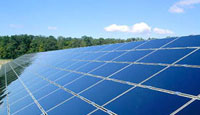
The International Renewable Energy Agency (IRENA) meeting in Abu Dhabi - the first major global gathering since Paris - is seen as an important test of countries' readiness to put those plans into action. Technology will help solve our energy issues. The urgency of climate change and the energy needs in the poorest parts of the world require an aggressive global program for zero-emission energy innovation. The new model will be a public-private partnership between governments, research institutions, and investors. Scientists, engineers, and entrepreneurs can invent and scale the innovative technologies that will limit the impact of climate change while providing affordable and reliable energy to everyone. "The Paris agreement set a long-term vision for the deep reduction of global emissions and the need to decarbonise the energy sector," Adnan Amin, IRENA's director general said in a prepared statement. "The IRENA assembly must now take the next steps and establish a blueprint for action to meet our climate goals and set the world on a path to a sustainable energy future." In an effort to spur countries to action, the IRENA (International Renewable Energy Agency) report released found doubling the share of renewables by 2030 would increase global GDP by up to 1.1% or about $1.3tn, and provide jobs for more than 24 million in the renewable sector. Not only can renewables achieve the desired shift in energy generation for climate goals, but the shift to renewables will also be a complete economic win both short and long-term with regards to job creation and return on investment.
View January 26, 2016 Salon article |
|
|
Print version |
Top |
