

 RSS Feeds:

|


News |
- Manitoba Minnesota Transmission Project
- Climate Change In Canada's Election
- Harper Continues Attack On Science
- New First Nations Alliances
- Divestment in the Trillions Now
- Pope Francis On The Planet and Poverty
- Canada Last On Environmental Protection
- The LEAP Manifesto: A Way Forward For Canada
- Shoal Lake Road Almost
- Nexen Fracking License Nixed
- Coal Ash All Radioactive
- Canada Leads World In Deforestation
| Manitoba Minnesota Transmission Project | 2 October 15 |
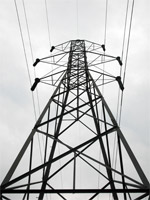
The MMTP project connects converter stations in southern Manitoba, near Winnipeg, to a new line for export of energy to Minnesota. Using a combination of existing corridors, private lands, and public lands, the MMTP is an alternating current system to enable export of what the utility terms 'new green energy' from dams in northern Manitoba. Many rural municipalities, farmers, towns, and First Nations are affected by the project. The Manitoba cabinet is likely to issue its reference to the Manitoba Clean Environment Commission (CEC) to hold hearings soon. The stages of CEC proceedings would start in fall 2015 and go into the first half of 2016.
View Manitoba Hydro MMTP Scoping Document |
|

 Print version |
Top |
| Climate Change In Canada's Election | 2 October 15 |

Current polls show Canadians are looking for greater leadership from the federal government on climate change. Canada's next Prime Minister will represent Canada at the 21st UN Framework on Climate Change Conference of Parties (COP21) in Paris. World leaders have been charged with forging an agreement to prevent catastrophic climate change. The deadline for this agreement is December 2015 in Paris. Whether or not Canada plays a constructive role in these talks -- and how efficaciously Canada contributes to reducing global greenhouse gas emissions -- will be determined by the decisions we make at the polls.
Listen to October 1, 2015 Global Research News Hour episode 114 |
|
|
Print version |
Top |
| Harper Continues Attack On Science | 2 October 15 |

Source: Boing Boing
The Lethbridge library was part of a networked association of Agriculture Canada libraries. Linked through a central database, the libraries could order books from each other. Locally, Lethbridge provided service to Agriculture Canada staff, Alberta provincial staff and the public. College and university students used the facility as did local historians. "The Harper government continues to target government science at every turn," Debi Daviau, president of the Professional Institute of Public Service (PIPSC) said in a release. "It is time Canadians understood the cumulative loss to federal science, in particular – of a government whose priorities are clearly out of step with both public scientists and the public interest." Harper has shut down 16 research libraries during his time in government. While the closures have attracted some media attention and news stories, there have been few detailed reports. The National Farmer's Union (NFU) issued a statement saying the closure of the Lethbridge Library was just the latest in a long line of government libraries, where collections were tossed into dumpsters, burned or went to landfills.
View September 22, 2015 National Observer article |
|
|
Print version |
Top |
| New First Nations Alliances | 2 October 15 |
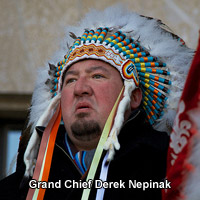
The chiefs voted unanimously at the Union of B.C. Indian Chiefs conference to develop strategies to work together to oppose Energy East, which they see as an unacceptable risk to their lands and waterways. A first-of-its kind "Indigenous Treaty" is also in the works to tackle oil sands expansion in general. On the Prairies, where First Nations are facing two pipelines —Energy East and Enbridge's Line 3 replacement —Manitoba's Grand Chief says Indigenous peoples oppose the projects over "climate chaos" and water contamination concerns. "We know the climate is changing. You don't need a scientist to tell you that," said Grand Chief Nepinak, of the Assembly of Manitoba Chiefs. "We can feel that when we go outside. The forest fires across the land." "If we move forward with Mr. Harper's natural resource development strategy, which would mean new pipelines across the territories, which would mean an expansion of the tar sands, we're not doing anything for our future generations."
View October 1, 2015 Natinal Observer article |
|
|
Print version |
Top |
| Divestment in the Trillions Now | 25 September 15 |

"This movement has struck a chord with people across the world who care about climate change, and convinced some of the largest and most influential institutions in the world to begin pulling their money out of climate destruction." - May Boeve, 350.org Since the campaign began in earnest less than three years ago, the report shows, more than 400 institutions and over 2,000 individuals have pledged to divest from companies that derive profits from coal, oil, or gas. Presented just months ahead UN climate talks in Paris and conducted by financial researchers at Arabella Advisors on behalf of the 'Divest-Invest' campaign—an effort driven by a coalition of climate action and public advocacy groups—the findings of the analysis reveal enormous strides over a relatively brief period for the idea of transitioning investments as part of the fight against human-driven global warming.
View September 23, 2015 Common Dreams article |
|
|
Print version |
Top |
| Pope Francis On The Planet and Poverty | 25 September 15 |

Pope Francis' encyclical letter on the environment, Laudato Si, makes the case for "the intimate relationship between the poor and the fragility of the planet" and speaks of the pope's conviction that "everything in the world is connected." "The human environment and the natural environment deteriorate together; we cannot adequately combat environmental degradation unless we attend to causes related to human and social degradation," Pope Francis says in the encyclical. At his White House speech on September 23, he built on this theme, speaking of our need to invest in our "common home". Failure to protect God's good creation for future generations is a sign of moral and social failure, according to Francis. The Pope praised the U.N. as an instrument for protecting the environment, alleviating poverty and furthering peace and reconciliation. But he warned the UN against practicing a kind of cultural imperialism that fails to respect the autonomy of poorer countries, particularly in matters of sexuality and the family. "A selfish and boundless thirst for power and material prosperity leads both to the misuse of available natural resources and to the exclusion of the weak and disadvantaged," Pope Francis said.
View September 25,2 015 Time article |
|
|
Print version |
Top |
| Canada Last On Environmental Protection | 25 September 15 |
|
Canada dropped from 12th place last year and did far worse in the environmental protection category, where it ranked 27th. Every other country made progress in this area except Canada, the centre said in a report on the rankings. Canada "has the dubious honor of being the only CDI country with an environment score which has gone down since we first calculated the CDI [in 2003]," the report said. "This reflects rising fossil fuel production and its withdrawal from the Kyoto Protocol, the world's only treaty governing the emissions of heat-trapping gasses. Canada has dropped below the U.S. into bottom place on the environment component." Owen Barder, a senior fellow at the centre who prepared the index, said in an interview that the environment category has become one of the bright spots in the survey. "Environment is the one part of our index that has really seen improvement and Canada has been the only country that's fallen," he said. "My expectation would have been that Canada is environmentally friendly, Canadians all seem to take the environment seriously."
View October 22, 2014 Huffington Post article |
|
|
Print version |
Top |
| The LEAP Manifesto: A Way Forward For Canada | 18 September 15 |

The Leap Manifesto – a wide-ranging document signed by more than 100 prominent progressive Canadians – lays out an ambitious plan to end fossil fuel subsidies, increase income taxes on corporations and the wealthy, cut military spending and implement a progressive carbon tax. Signatories include actors Donald Sutherland, Rachel McAdams, and Ellen Page; musicians Neil Young, Leonard Cohen, and Alanis Morissette; and writers William Gibson and Michael Ondaatje, along with major environmental groups and labour unions. "We start from the premise that Canada is facing the deepest crisis in recent memory," the manifesto states. Calling Canada's record on climate change "a crime against humanity's future", it urges a rapid shift over the next two decades to a fully sustainable energy economy. From the LEAP Manifesto; Canada is not this place today – but it can be.' The Leap Manifesto: A Call for a Canada Based on Caring for the Earth and One Another calls on government to honour indigenous rights and move toward a clean economy fuelled by renewable energy. According to the manifesto, this can be achieved in around three decades by moving away from industries like mining and oil extraction and instead focusing on environmentally-friendly technology.
Visit The LEAP Manifesto website |
|
|
Print version |
Top |
| Shoal Lake Road Almost | 18 September 15 |
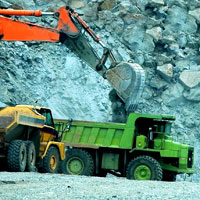
To make matters worse, the Ojibway community has been cut off from the mainland for nearly one hundred years and is forced to cross the lake year-round. The journey becomes precarious as the seasons change, and nine people have slipped through winter ice and died in the last 15 years. The Manitoba government and City of Winnipeg have agreed to spend $10 million apiece to build a road to the community, but they are waiting for the federal government to come forward with cash. Premier Greg Selinger said it is time for the federal government to come forward. Selinger also said Ontario Premier Kathleen Wynne has told him she will find a way for her province to be supportive as well.
View September 16, 2015 Aboriginal Peoples Television Network article |
|
|
Print version |
Top |
| Nexen Fracking License Nixed | 18 September 15 |

The long term water licence granted in 2012 allowed Nexen Inc. to pump 1.4 million cubic metres of water a year from Tsea Lake and Tsea River, located about 100 kilometres northeast of Fort Nelson. The Tsea River watershed is within the First Nation’s traditional territory. During the appeal hearing, the First Nation provided evidence that some of its members hunt, fish, trap, gather plants, inhabit cabins, and travel in the Tsea River watershed on a seasonal basis, as their families did in the past. In addition, the Tsea Lakes are within a trapline area that is registered to members of the First Nation, who operate different portions of the trapline. In its ruling, the Environmental Appeal Board of B.C. said the science behind the licence is fundamentally flawed. It also ruled the province acted in bad faith when it did not properly consult with the Fort Nelson First Nation, breaching a constitutional duty to consider potential adverse effects of the water licence.
View September 8, 2015 CBC News article |
|
|
Print version |
Top |
| Coal Ash All Radioactive | 4 September 15 |
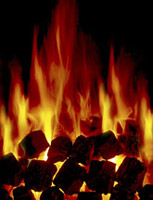
High concentrations of radioactive contaminants have been found in coal ash produced in North America's three largest coal-producing regions -- the Illinois, Appalachian and Powder River basins. Until now, environmental protections focused on a variety of other contaminants commonly found in coal ash, and other forms of coal pollution. But a recent study by researchers at Duke University show that radioactivity levels are worryingly high. "Until now, metals and contaminants such as selenium and arsenic have been the major known contaminants in coal ash," Avner Vengosh, professor of geochemistry and water quality at Duke's Nicholas School of the Environment,explained in a press release. "This study raises the possibility we should also be looking for radioactive elements, such as radium isotopes and lead-210, and including them in our monitoring efforts."
View September 2, 2015 Climate Progress article |
|
|
Print version |
Top |
| Canada Leads World In Deforestation | 4 September 15 |
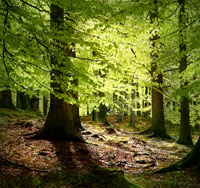
"Canada is the number one in the world for the total area of the loss of intact forest landscapes since 2000," Peter Lee, of Forest Watch Canada, said. "There is no political will at federal or provincial levels for conserving primary forests," he said. "Most logging done in Canada is still to this day done in virgin forests." Using satellite technology, scientists from the University of Maryland, Greenpeace, Global Forest Watch and the World Resources Institute have tracked changes in the earth’s forest coverage. The scientists discovered that the pace of decline is accelerating with more than 104 million hectares – about 8.1 per cent of global undisturbed forests — lost from 2000 to 2013.
View September 3, 2015 Global Forest Watch blog post |
|
|
Print version |
Top |
